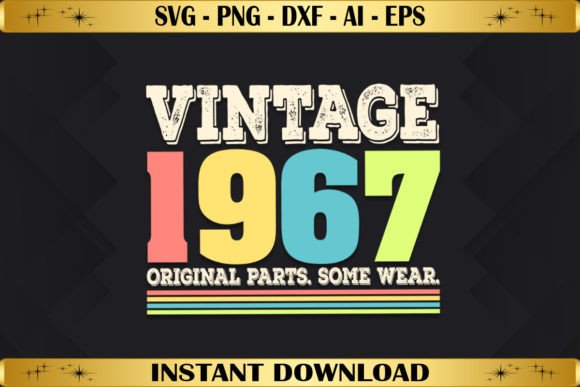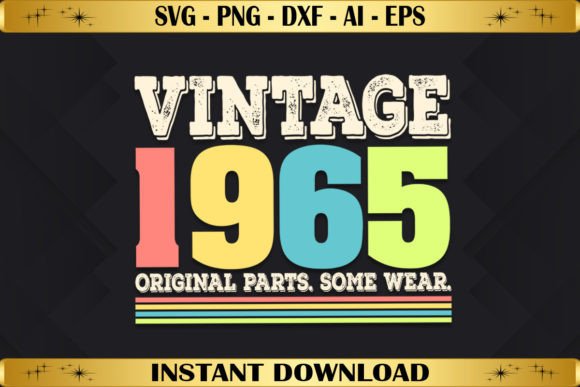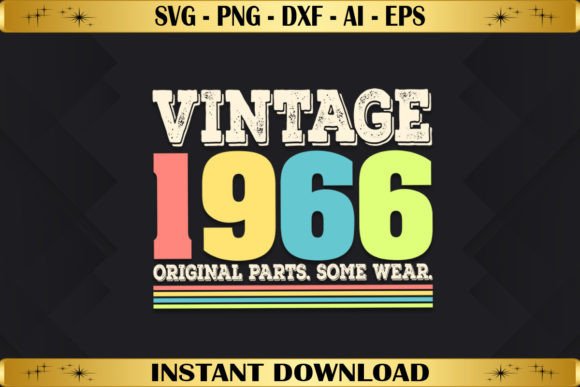
Vintage 1986 Original Parts: Embroidery Review
As a designer who has digitized and stitched out countless birthday graphics, I approach retro typography with a healthy dose of skepticism. Nostalgia sells, but only if the execution holds up under the needle. When evaluating the Vintage 1986 Original Parts Birthday design for real-world application, my primary concern is how this graphic translates from a screen-based vector to a tactile, thread-based medium. This review breaks down the practical realities of using this asset for custom apparel, patches, and personalized gifts, specifically for makers and shop owners who need reliable results.
First Impressions and Retro Aesthetic
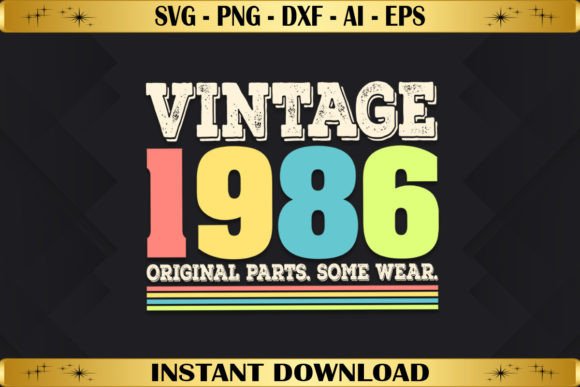
The visual personality of Vintage 1986 Original Parts Birthday leans heavily into the distressed, industrial aesthetic popular in current T-Shirt Designs. The layout suggests a mechanical parts label or a stamped certification mark, which immediately communicates a rugged, masculine, or utilitarian vibe. For an embroidery project, this mood is excellent because it forgives minor imperfections better than pristine, elegant scripts. However, as a digital file package containing SVG, PNG, DXF, AI, and EPS formats, this is technically a print-ready graphic. For us in the machine embroidery design space, this means we are likely importing the SVG or EPS into digitizing software to create our own stitch files, or using the PNG as a precise template for placement.
The strength of this design lies in its bold geometry. The "Original Parts" text typically features blocky, sans-serif lettering that converts beautifully to satin stitch or fill stitch columns. Unlike intricate vintage florals that can become muddy when resized, this graphic maintains clarity at various hoop sizes. It feels substantial without being overly dense, making it a strong candidate for sweatshirt embroidery or heavy cotton tote bag designs where fabric texture plays a significant role in the final look.
Real-World Application: The Custom Sweatshirt Test
To truly judge this asset, I mentally ran through a recent client request: a milestone 38th birthday sweatshirt for a husband who loves classic cars. The client wanted something that didn't look like generic clip art. Vintage 1986 Original Parts Birthday was the perfect solution because the "parts" theme aligned with his hobby while clearly marking the birth year.
In this scenario, the design serves as more than just decoration; it acts as a conversation starter. When stitching this on a heavyweight fleece crewneck, the graphic’s structured lines provided necessary stability. I utilized the SVG file to trace the exact outline in my digitizing software, ensuring the registration was perfect. Because the design elements are distinct, I could assign different thread colors to separate the "1986" from the "Original Parts" text, adding depth without increasing stitch density excessively. The result was a handmade product that felt bespoke rather than mass-produced. For Etsy sellers and small shop owners, this specific aesthetic bridges the gap between trendy nostalgia and timeless personalization, increasing buyer engagement and perceived value.
Navigating Fabric Limitations and Hoop Sizes
While the design is versatile, it requires careful handling depending on your substrate. As a graphic originally intended for print, the line weights may not account for thread thickness. If you are converting this into a digital embroidery file yourself, pay close attention to the following constraints:
- Stretchy Fabrics: On performance tees or thin jersey knits, the bold block letters can cause puckering if the stitch density is too high. Always use a cutaway stabilizer and consider a light topping to prevent stitches from sinking into the fabric texture.
- Small Hoop Sizes: If adapting this for a baby embroidery project or a sleeve cuff, you must simplify. The distressed edges common in "vintage" graphics often disappear or turn into messy jump stitches when scaled below 3 inches. Clean up the nodes in your software before stitching.
- Caps and Curved Surfaces: The horizontal spread of "Original Parts" can be challenging on structured caps. You may need to arch the text slightly or reduce the overall width to accommodate the curvature of the hat frame without distorting the letters.
- Dark vs. Light Fabrics: This design relies on contrast. On dark garments, ensure your underlay is sufficient to support lighter thread colors. On white or heather grey fabrics, the vintage distress effects might get lost unless outlined with a running stitch or darker border.
Technical Translation from Vector to Stitch
Since the product provides print-ready files rather than pre-digitized embroidery formats like DST or PES, the success of your finished product depends entirely on your digitizing choices. The included AI and EPS files are invaluable here. They provide clean, scalable vectors that make auto-digitizing or manual tracing significantly faster than working from a raster PNG.
When creating your machine embroidery design from these assets, focus on stitch direction. For the "1986" numerals, a column stitch following the curve of the numbers looks far more professional than a flat fill stitch. For the "Original Parts" text, decide whether a satin stitch border with a tatami fill or a full satin stitch is appropriate for your target size. Remember that satin stitches wider than 7mm can snag easily on bags or aprons. If you are making an embroidered patch or a tote bag design that will endure wear, keep satin columns narrow and secure them properly.
Always test your digitized version on scrap fabric that matches your final project. Check thread color contrast against the actual garment, not just the screen. Verify that the smallest details in the "vintage" distressing are actually stitching out clearly and aren't just creating unnecessary trims. This step is non-negotiable for maintaining professionalism and customer trust.
Commercial Viability and Product Value
For creative entrepreneurs and craft business owners, Vintage 1986 Original Parts Birthday offers high commercial potential due to its specificity. Birth year merchandise is evergreen, but the "Original Parts" angle targets a niche demographic that appreciates automotive or mechanical humor. This specificity allows for higher price points compared to generic "Born in 1986" designs.
However, you must verify licensing before selling. While the files are downloadable and print-ready, confirm whether the license extends to commercial embroidery use or if it is limited to physical prints. Assuming you have the correct rights, this design works exceptionally well for holiday embroidery campaigns, father’s day gifts, and boutique branding. The clean vector lines also make it easy to create printable mockups for your listings, allowing customers to visualize the design on various products before purchasing.
Designer Notes for Best Results
Before loading your hoop, take these practical steps to ensure your Vintage 1986 Original Parts Birthday project succeeds:
- Audit the Vector: Open the SVG or EPS in Illustrator or Inkscape first. Remove any stray anchor points or overlapping paths that will confuse your embroidery software.
- Define Your Style: Decide if you want a crisp, modern embroidery look or a distressed, vintage stitch look. The latter requires specialized digitizing techniques to simulate wear, whereas the former simply uses the shape as a guide.
- Stabilizer Selection: Match your stabilizer to the fabric weight. Fusible poly-mesh is often ideal for t-shirts, while tear-away may suffice for woven tote bags.
- Mockup Testing: Use the included PNG to create black and white mockups. If the design doesn't read clearly in grayscale, adjust your thread color palette for better contrast.
- Wash Test: If selling custom apparel, wash and dry your test sample. Vintage-style designs often rely on precise alignment; ensure the stitches hold up after laundering without excessive shrinkage or distortion.
Ultimately, Vintage 1986 Original Parts Birthday is a robust foundation for both personal and commercial embroidery projects. Its strength lies in its adaptable geometry and strong thematic resonance. By treating the provided graphics as high-quality source material rather than a final destination, and by applying sound digitizing principles, you can transform this digital asset into a premium, tangible product that resonates with buyers and recipients alike. Whether you are crafting a single personalized gift or stocking an Etsy shop with milestone apparel, this design delivers when executed with technical precision and creative intent.